


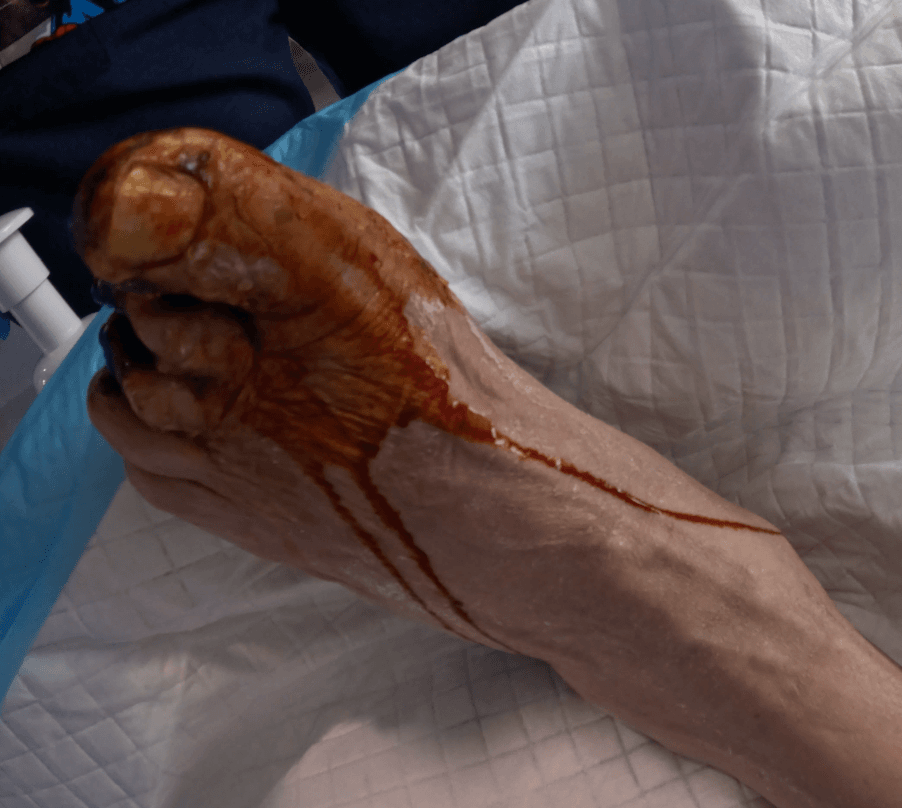
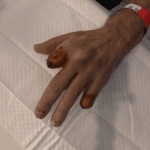
Liberally apply iodine to the toes and forefoot, ensuring complete coverage between the toes and across the plantar surface.
Allow the iodine to dry completely.
To dry out the ischaemic areas so that they do not progress to wet gangrene and cause sepsis. In this particular case, the patient has wet gangrene on the plantar aspect of his second and third toes.
Daily
This can be found in the small dressing pack
It is not recommended to wrap ischaemic areas, as sweat and moisture can cause the dry tissue to convert to wet gangrene. In this case, however, the dressing was applied at the patient’s insistence and was performed daily in the hospital setting.
Zetuvit Plus (10cm x 10cm)It is not recommended to wrap ischaemic areas, as sweat and moisture can cause dry tissue to progress to wet gangrene. In this case, the dressing was applied at the patient’s insistence and was performed daily in the hospital.
Cotton Bandage and CrepeProduct Selection Disclaimer:
The wound care products being currently used are a suggestion ONLY. They do not take into account your patient's individual needs which you must assess. No funding from medical companies has been provided and wound care products are chosen on their merit and what is available on the NSW Health State Wound Care Contract. Where an exact brand name product is not available we suggest you review the alternative tab or use another wound care product from its category eg. Hydrofibre
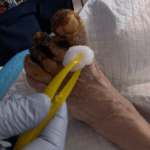
Clean the toes thoroughly, ensuring that you clean between each toe and remove any residual iodine from the area.

Dry the toes and the periwound area thoroughly.


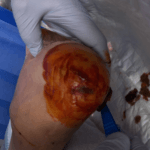
Clean and dry the heel thoroughly, then liberally apply iodine and allow it to dry completely.
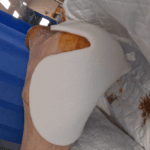
Apply the heel protector.
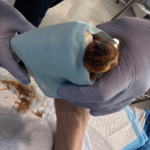
If possible, avoid wrapping the affected limb, as moisture and sweat can cause the ischaemic area to progress to wet gangrene. In this case, wrapping was done at the patient’s insistence.
What have we learnt:
1.Go pro cameras have a focal point of approx. 30cm.
2.Avoid bandaging the necrotic/ischaemic toes.
To continue using this website, you must review and accept our End User Licence Agreement.
By selecting I Agree, you confirm you have read and agree to be bound by the EULA (version 2026-01-07).